How kids bypass Screen Time on the Mac (and how to actually stop it)
A second account, a sign-out, a clock change, a different browser. A determined kid gets around Apple Screen Time, and most paid parental controls, on a Mac in minutes. Here’s every common bypass, why it works, and what a tool has to do to close it.
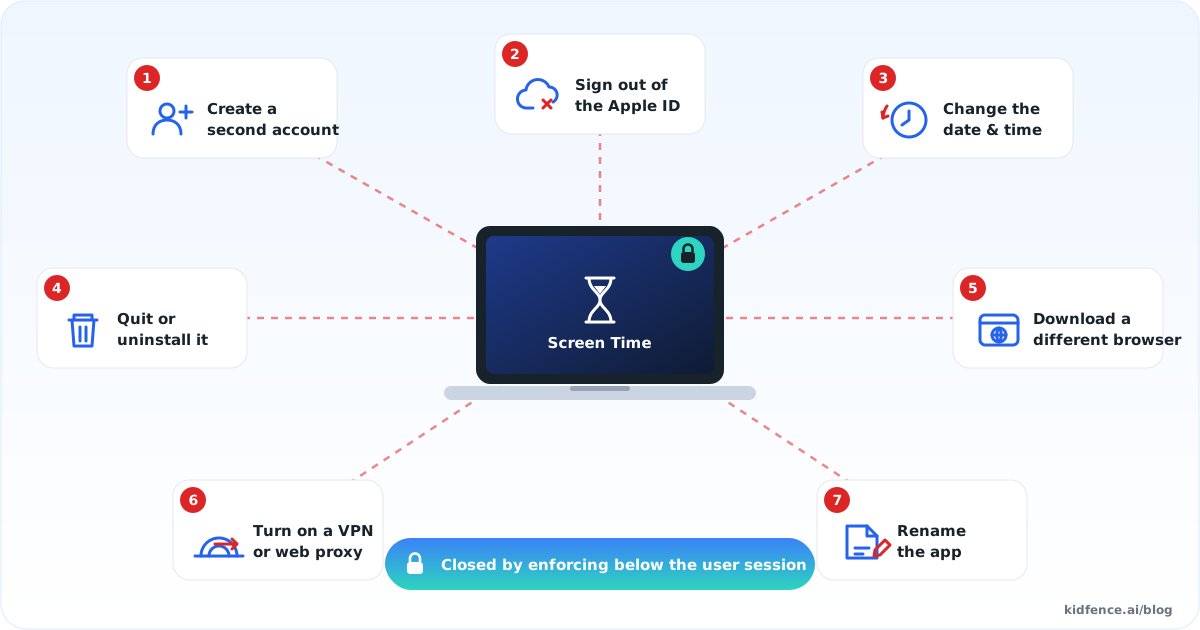
If you’ve set up Screen Time on your kid’s Mac and it still feels like nothing changed, you’re not imagining it. The Mac is the weak spot in almost every parental control: the phone tools are mature and free, but the Mac client is usually an afterthought. A ported phone app, a per-account setting, or a network filter a kid can step around without much effort.
And they do. On the App Store, the kids’ companion apps for the major parental controls sit at one to two stars, from thousands of ratings, and a good share of those reviews are kids openly swapping ways to defeat them. One even walks other kids through it step by step:
“Kids, if you have a Mac device install Apple Configurator from the App Store and set your device with a profile that prevents it from being downloaded.”
— a 1★ review of a major parental-control kids app, App StoreNone of what follows is a secret. Kids trade these in group chats and on forums already. The point of listing them is the opposite: once you can see exactly how a control gets bypassed, you can tell whether the tool you’re using, or about to pay for, actually closes the gap or just looks like it does.
The seven ways kids get around it on a Mac
Roughly in order of how often they show up. For each one: how the kid does it, why it beats most tools, and what it takes to actually stop it.
Create a second account
They add a new standard or admin user in System Settings and log into a clean, unmanaged desktop. Apple Screen Time and most ported apps are enforced per account, so the one you set up simply doesn’t apply here.
What actually stops it: enforcement from a system-wide background service that covers every account on the Mac — plus a locked second-account setup where the kid never holds the admin password.
Sign out of the Apple ID
Screen Time and Family Sharing hang off the child’s Apple ID. Sign out — or switch to a different Apple ID — and the limits leave with it.
What actually stops it: control that doesn’t depend on the Apple ID at all, and enforces locally on the device no matter who’s signed in.
Change the date & time
Downtime starts at 9pm? Roll the clock back to 8. A lot of schedulers, Screen Time included, read the system clock, so moving the date forward or back lifts the limit.
What actually stops it: a schedule enforced by a service that ignores the user-set clock, and a web filter that stays on regardless of the time.
Quit or uninstall the app
A parental control that runs as an ordinary app can be force-quit from Activity Monitor or dragged to the Trash. Some reinstall a previously-approved app, or use a configuration profile trick, to get around a block.
What actually stops it: a privileged background service (not a quittable app window) that blocks apps at launch by signature — so a re-download or rename doesn’t change the outcome.
Download a different browser
The filter watches Safari and Chrome, so the kid installs Firefox, Brave, or Arc — or opens a private/incognito window — and browses filter-free. Apple’s own web controls are the clearest case: even the new Ask to Browse in macOS 27 only gates new sites in Safari, and a standard account can install any other browser without an admin password. Spotlight’s web preview opens pages with no browser at all.
What actually stops it: blocking unauthorized browsers by code signature and disabling private/incognito browsing, so there’s no unfiltered path.
Turn on a VPN or web proxy
A free VPN or a web-proxy site tunnels straight past a DNS or content filter. Ironically, tools that filter using their own VPN can often just be switched off in Settings — and when their VPN breaks, so does the kid’s internet.
What actually stops it: filtering at the Network Extension layer (no tunnel to toggle), while proxy and VPN apps are themselves blocked.
Rename the app
Blockers that match on filename are beaten by renaming Roblox.app to Homework.app. The game launches; the block looks for a name that no longer exists.
What actually stops it: matching on the app’s code signature, not its filename, so renaming changes nothing.
Why most tools miss all seven
Notice the pattern: nearly every bypass works because the control lives inside the user’s session. A per-account setting, an app the user can quit, a filter tied to one Apple ID or one browser. Anything a standard user can do (add an account, sign out, change the clock, install a browser) is enough to step outside it.
That’s not a knock on any one product. It’s a consequence of building a Mac client as an afterthought to a phone app. And it shows up in the reviews, not just from kids, but from parents whose filter got in the way of the actual computer:
“I’m connected to the VPN and still Safari will not load anything. It says I’m not connected to the internet.”
— a 1★ review of a VPN-based parental control, App StoreClosing all seven takes a different foundation: enforcement that runs below the user session, as a privileged system service, using the frameworks Apple built for exactly this. Network Extension for web filtering, Endpoint Security for app control. Those APIs are available to any developer, so this is a design choice, not a secret.
What to check before you trust any tool
Whether it’s Screen Time, something you already pay for, or something you’re evaluating, these four questions separate the tools that hold from the ones that look like they do. Try each one yourself on the kid’s Mac. It takes ten minutes.
- Does it apply to a brand-new user account? Log in as a fresh standard user and see if the rules follow you. If they don’t, the control is per-account and a kid can leave it.
- Does it survive signing out of the Apple ID? Anything that hangs off Family Sharing leaves with it.
- Does it still block after a rename, a reinstall, or a different browser? Rename the game, redownload it, install Firefox. A tool that matches on code signature and filters at the network layer shrugs; one that matches on filenames or watches only Safari doesn’t.
- Can the kid’s account change the clock or quit the service? If the kid holds an admin password, every answer above is moot. The kid’s account has to be a standard account, with the admin password held by the parent.
If you’re already paying for one that doesn’t hold up
You don’t owe it a renewal. One practical note: cancel first, so you’re not double-billed while you try something else. If you subscribed on the vendor’s website, cancel under your account’s billing settings and keep a record, since web-billed cancellations that keep charging are a common complaint. If you subscribed through the App Store, it’s one tap under Settings, your name, Subscriptions on your iPhone.
Common questions
Can a kid bypass parental controls with a second account on a Mac?
With most tools, yes. Apple Screen Time and ported phone apps are enforced per user account, so creating a new standard or admin account gives a kid a clean, unmanaged desktop. The fix is enforcement from a system-wide service that applies to every account on the Mac, plus a setup where the kid’s own account is standard and the admin password stays with the parent.
Does changing the date and time get around Screen Time on a Mac?
It can. Screen Time downtime and many third-party schedulers key off the system clock, so moving the date forward or back can lift the limit. Two things close it: a kid account that can’t change the clock (a standard account, not an admin), and a schedule enforced by a background service rather than the user-set time.
What about a VPN, a proxy site, or a different browser?
A filter that watches one browser is beaten by installing another, and a standard account can install a browser without a password. A filter that runs at the Network Extension layer sees every app’s connections, so the browser doesn’t matter, and it has no VPN of its own for a kid to switch off. Look for a tool that also blocks VPN and proxy apps at launch.
How do I actually cancel Qustodio or Net Nanny?
If you subscribed on the vendor’s website, sign in and cancel under your billing or subscription settings, then follow up by email if the charge continues. If you subscribed through the App Store, cancel under Settings, your name, Subscriptions on your iPhone. Do it before switching so you’re not double-billed during another tool’s free trial.